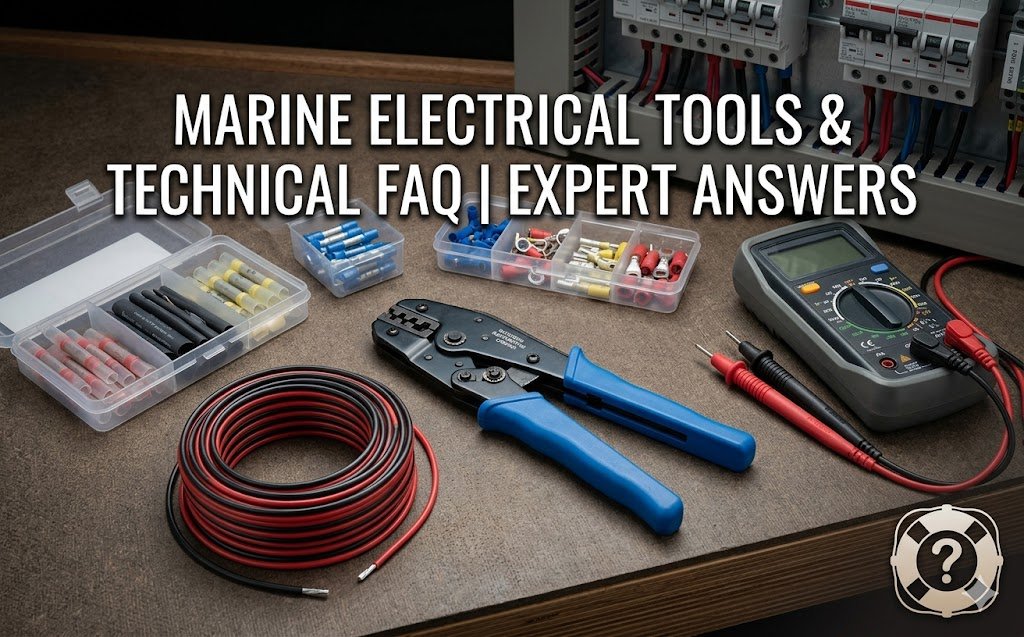
Marine Electrical Tools & Technical FAQ
Welcome to our Marine Electrical FAQS page . Find expert answers to common questions about boat wiring, marine-grade tool selection, and 2026 electrical standards.
Tool Selection & Usage
What makes a tool “marine-grade”?
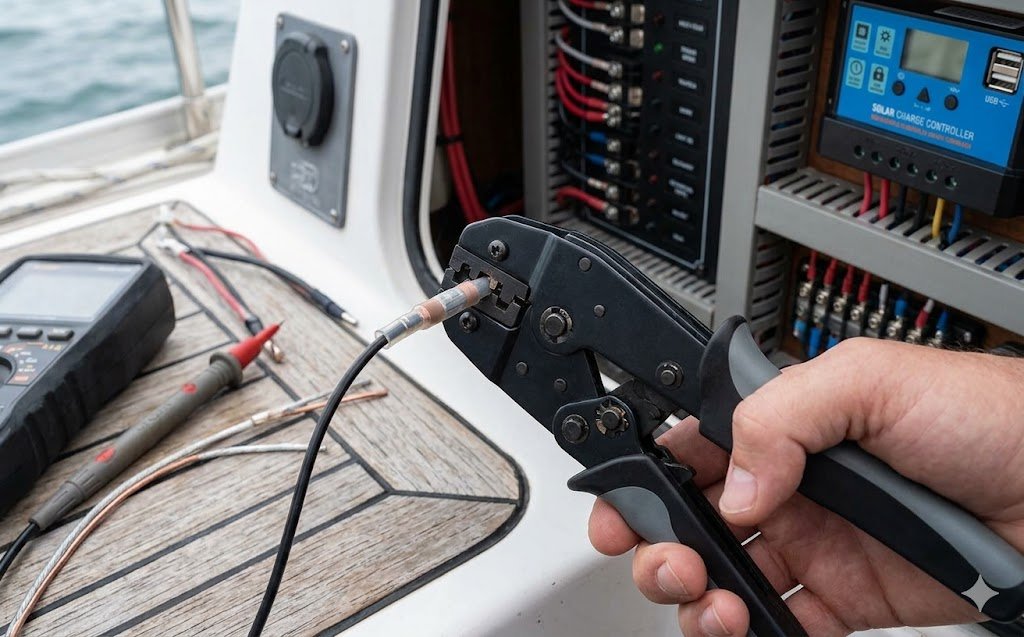
Marine-grade tools are specifically engineered for high-corrosion environments. When shopping, look for features like compatibility with tinned copper wire, double-insulated handles for safety, and ratcheting crimpers. These ensure a “gas-tight” seal on heat-shrink terminals, preventing saltwater intrusion that destroys standard connections.
Do I really need a specialized crimper for marine terminals?
Yes, the FAQS are, that standard automotive crimpers often have sharp edges that pierce the delicate heat-shrink insulation. Marine-specific crimpers use a smooth “nest and indent” or specialized die-set to compress the terminal without damaging the waterproof jacket, maintaining the integrity of your seal.
Technical Standards & 2026 Tech
What are ABYC standards, and why do they matter?
The American Boat & Yacht Council (ABYC) Get the FAQS on the industry safety standards (such as E-11) for boat wiring. Following these standards ensures your electrical work is safe, professional, and—most importantly—compliant with marine insurance requirements. All the tools we carry are selected to help you meet or exceed these rigorous standards.
Can I use a standard multimeter for modern 2026 marine electronics?
While a basic multimeter works for simple DC circuits, modern vessels with NMEA 2000 networks and LiFePO4 (Lithium) systems require more precision. We recommend a True RMS Digital Multimeter or a Clamp Meter with Bluetooth logging to safely diagnose high-output charging systems and complex data networks.
Maintenance & Safety
What are the FAQS for preventing corrosion on my marine electrical connections?
To stop “green wire disease,” we recommend the Golden Trio of Marine Wiring:
- Always use Tinned Copper Wire.
- Seal every connection with Adhesive-Lined Heat-Shrink.
- Apply a small amount of Dielectric Grease to any exposed metal surfaces.
Why does my circuit breaker keep tripping on shore power?
This is often a sign of a “ground fault” or a corroded shore power inlet. Before replacing parts, use a Non-Contact Voltage Tester or an Outlet Tester to check for reverse polarity or leakage. Safety first: always test your shore power pedestal before plugging in your vessel.
Advanced System Integration & Monitoring
How do I integrate Lithium (LiFePO4) into an older charging system? Upgrading to Lithium isn’t as simple as a “drop-in” replacement if you want longevity. Most older alternators and shore power chargers lack the specific charging profile required for LiFePO4. We recommend installing a DC-to-DC Battery Charger to regulate the current and voltage, protecting both your new battery investment and your alternator from overheating.
What is the benefit of NMEA 2000 monitoring for electrical systems?
In 2026, the standard for a “smart boat” is digital switching and remote monitoring. By using NMEA 2000-compatible shunts and gateways, you can view real-time battery state-of-charge (SOC), solar production, and tank levels directly on your Multi-Function Display (MFD). This removes the guesswork and allows for automated alerts before a low-voltage situation becomes a crisis.
Does my boat need a Galvanic Isolator?
If you regularly plug into shore power, the answer is almost certainly yes. A Galvanic Isolator blocks low-voltage DC currents that travel through the green safety ground wire. Without it, your underwater metals (zincs, props, and shafts) can be sacrificed to protect the boat next to you, leading to rapid “electrolysis” and costly damage.
The Marine Electrical Safety Checklist FAQS
Before heading offshore, perform this quick five-point inspection to ensure your system is mission-ready:
- Check for “Green Wire Disease” (corrosion) at all terminal ends.
- Verify battery terminal tightness to prevent high-resistance heat buildup.
- Test your Bilge Pump manual override and float switch functionality.
- Inspect shore power cord locking rings for signs of melting or pitting.
- Confirm your fire extinguishers are pressurized and accessible near electrical hubs.
Please Visit Our Home Page for More Tools!