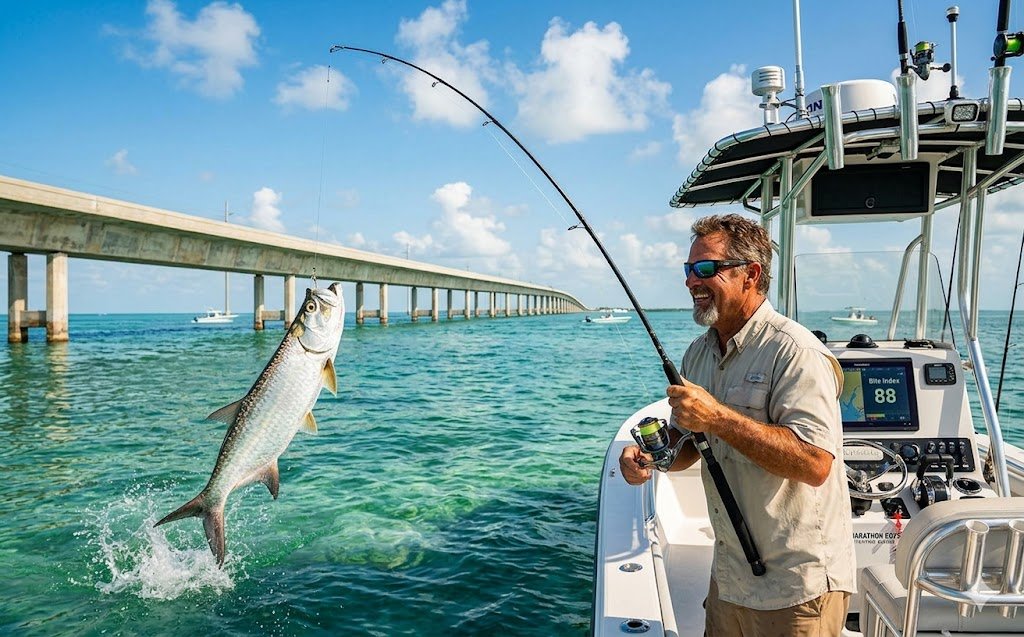
As the #1 Best Florida Keys fishing guide, this comprehensive resource is designed to help you navigate the productive but complex waters of the “Sportfishing Capital of the World.” Whether you are a local captain or a first-time visitor, understanding the seasonal shifts and specific local hotspots is the key to a successful day on the water.
Quick Navigation
Table of Contents
Why You Need a Professional Florida Keys Fishing Guide
Navigating the Florida Keys requires more than just a boat; it requires an understanding of the intricate reef systems and backcountry flats. Many anglers rely on a Florida Keys fishing guide to unlock the secrets of the Middle Keys, from the deep-water humps of Islamorada to the bridge pilings of Marathon. By following a data-driven approach, you can predict fish behavior based on barometric pressure, water temperature, and moon phases.
Master the Seasonal Migration Patterns
The Florida Keys experience distinct fishing seasons. During the winter months, cool fronts push Sailfish and Kingfish closer to the reef edge. As spring arrives, the world-famous Tarpon migration begins, filling the channels under the Seven Mile Bridge. A high-quality Florida Keys fishing guide focuses on these transitions, ensuring you are using the right tackle for the right species at the right time.
Top 10 Florida Keys Fishing Hotspots for 2026
To maximize your efficiency, we have curated the ten most consistent locations for trophy catches. These spots are selected based on their accessibility and historical productivity.
- The Islamorada Humps: A legendary offshore destination for Blackfin Tuna and Mahi-Mahi.
- The Seven Mile Bridge: The epicenter of Tarpon fishing in the Middle Keys.
- Sombrero Reef: Ideal for Yellowtail Snapper and Grouper near the lighthouse.
- Vaca Cut: A high-flow current area in Marathon perfect for shark and snook.
- Alligator Reef Lighthouse: Famous for its crystal-clear water and abundance of reef fish.
- The 409 Hump: A deep-water pinnacle known for massive Billfish and Pelagics.
- Bahia Honda Rail Bridge: A scenic and productive spot for targeting Silver Kings on a falling tide.
- Marathon Hump: A go-to spot for deep-dropping for Snowy Grouper and Tilefish.
- American Shoal Light: A southern gem for those willing to make the run from Big Pine Key.
- Turtle Rocks: A backcountry favorite for Bonefish and Permit enthusiasts.
Using the Live Bite Index to Your Advantage
Our proprietary Bite Index uses real-time weather data to calculate a score out of 100. This index is a core feature of any modern Florida Keys fishing guide, as it helps you decide if you should head offshore or stick to the sheltered mangroves. When the index is above 80, it indicates a high-pressure system that typically triggers aggressive feeding windows.
Essential Gear and Safety Standards
Success on the water is only possible if your vessel is prepared. We advocate for strict adherence to ABYC Safety Standards to ensure your marine electronics and battery banks are reliable when you are miles from shore. A failed bilge pump or a dead starting battery can turn a world-class trip into a dangerous situation.
Best Baits for the Middle Keys
Depending on your target, your bait choice is critical. For Tarpon at the bridges, live mullet or silver sides are the gold standard. When hitting the reef for snapper, high-quality frozen chum and live shrimp are essential. Your Florida Keys fishing guide should always prioritize “matching the hatch” based on the current bait schools moving through the cuts.
Understanding Solunar Tables and Tides
In the Keys, the tide is the heartbeat of the ocean. A “Rising” tide generally brings cooler, oxygen-rich water from the Atlantic onto the flats, while a “Falling” tide flushes baitfish out of the mangroves. Professional anglers use solunar tables to identify “Major” and “Minor” feeding windows, which usually occur when the moon is directly overhead or underfoot.
Real-Time Weather Integration
Before leaving the dock, always consult a live weather radar. Fast-moving tropical squalls can appear without warning, especially during the summer months. By integrating live sensors into your pre-trip routine, you can stay ahead of the wind and ensure your crew remains safe while chasing the catch of a lifetime.
Finished with the hotspots? Return to our technical resource center.
⚓ EXPLORE ALL MARINE ELECTRICAL TOOLS
Leave a Reply